


iVM Channels
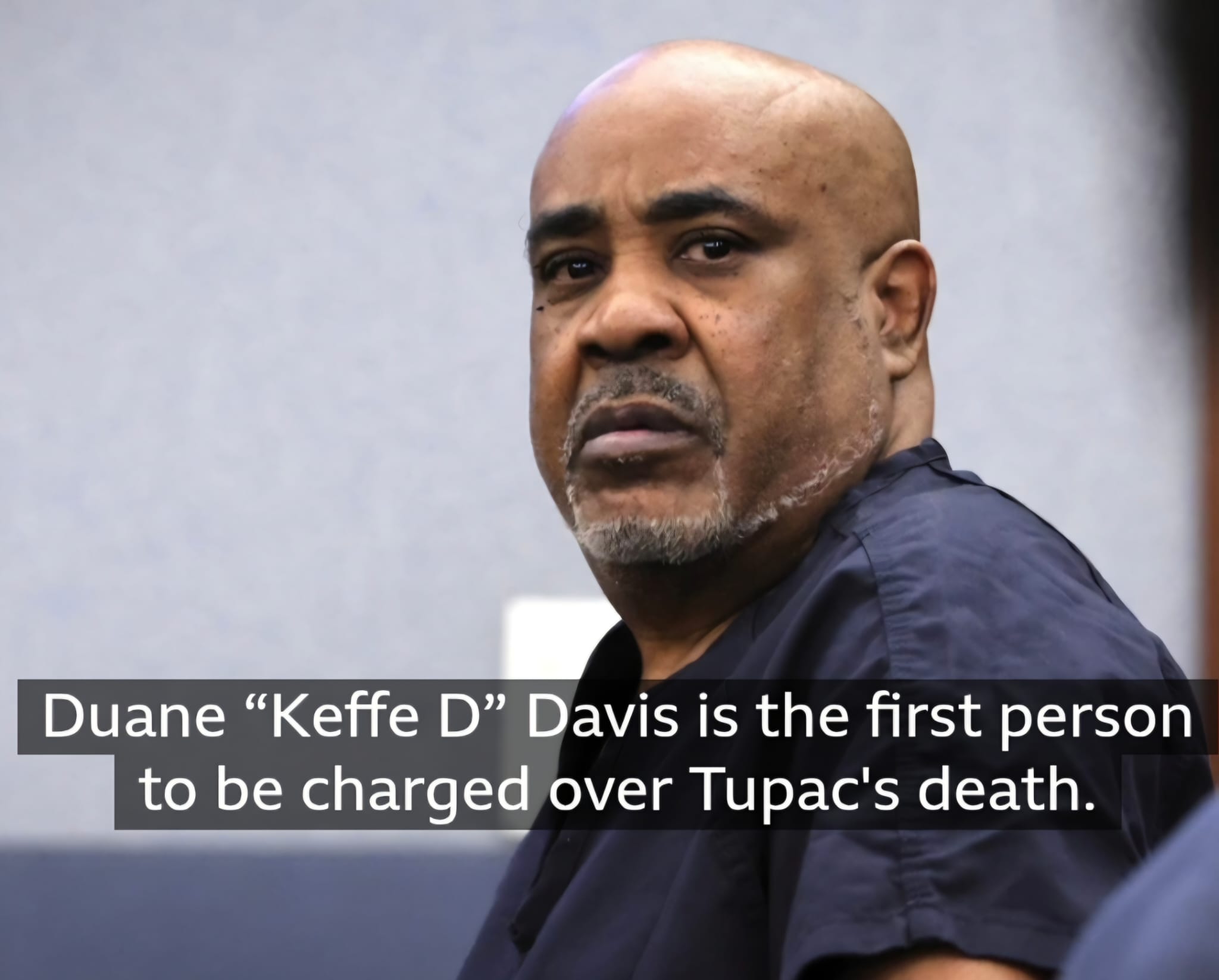
Former gang leader Duane Davis faces spending the rest of his life behind bars after a Las Vegas court sentenced him for orchestrating the fatal shooting of the legendary American rapper in 1996.
LAS VEGAS, United States — Nearly three decades after the murder of hip-hop icon Tupac Shakur shocked the music world, Duane “Keffe D” Davis, the former gang leader convicted of orchestrating the killing, has been sentenced to 40 years to life in prison.
The 63-year-old Davis was handed the sentence on Tuesday, October 13, 2026, by a court in Las Vegas, Nevada, following his conviction in August for first-degree murder involving the use of a deadly weapon.
The sentence marks a major development in one of the most notorious unsolved murder cases in American music history, which remained unresolved for almost 30 years before authorities arrested Davis in 2023.
Presiding judge Carli Kierny imposed consecutive sentences of 20 years to life for murder and 20 years to life for the use of a deadly weapon, resulting in a total sentence of 40 years to life.
Addressing Davis during sentencing, the judge condemned the killing and stressed the devastating consequences of taking another person’s life.
“You don’t get to take a man from his family, you don’t get to take his very life, his whole future from him and just walk away from it, especially when that man is Tupac Shakur,” the judge said.
She added that the world had never forgotten the rapper or the circumstances surrounding his death.
HOW TUPAC SHAKUR WAS KILLED
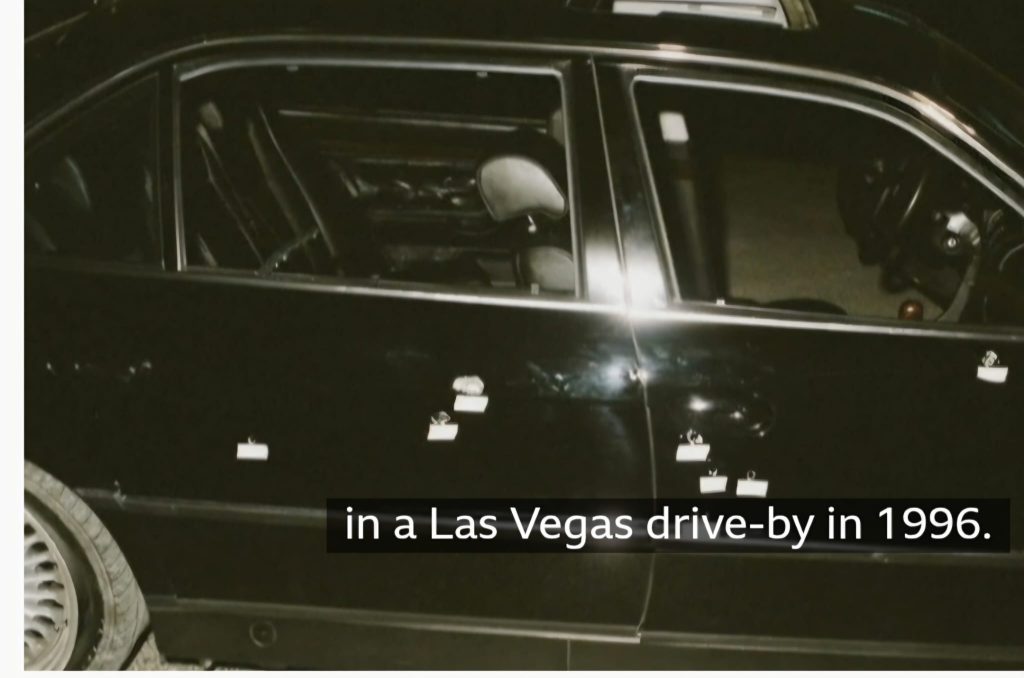
Shakur, widely regarded as one of the most influential rappers of his generation, was shot in a drive-by attack in Las Vegas on September 7, 1996.
The 25-year-old musician was travelling in a BMW driven by Marion “Suge” Knight, the co-founder of Death Row Records, when a white Cadillac pulled alongside their vehicle near the Las Vegas Strip and opened fire.
Shakur sustained multiple gunshot wounds and died in hospital six days later, on September 13. Knight survived the attack after suffering a minor injury.
The shooting occurred hours after a violent altercation at the MGM Grand casino involving members of rival gang factions. Davis’ nephew, Orlando Anderson, had been involved in the earlier confrontation with Shakur and members of the rapper’s entourage.
Prosecutors argued that the casino incident provided the motive for the subsequent attack, which they said was an act of retaliation.
The killing became intertwined with the bitter rivalry and violence associated with American hip-hop during the 1990s, particularly tensions involving Los Angeles gang factions and the record labels Death Row Records and Bad Boy Records.
PROSECUTORS: DAVIS ORCHESTRATED THE ATTACK
During the trial, prosecutors maintained that Davis played a central role in arranging Shakur’s murder, even though he was not accused of personally firing the fatal shots.
According to the prosecution’s account, Davis was inside the white Cadillac from which the gunfire was directed at Shakur and Knight. Prosecutors said he supplied a firearm to associates seated in the back of the vehicle, one of whom opened fire when the Cadillac drew alongside the BMW.
The prosecution relied heavily on Davis’ previous statements to investigators, media interviews and his 2019 memoir, Compton Street Legend, in which he described his involvement in events surrounding the shooting.
Investigators said those public accounts helped revive a case that had remained dormant for years.
Prosecutors argued that Davis’ statements, supported by other evidence presented during the trial, demonstrated that he had helped organise the attack in retaliation for the earlier casino confrontation.
A jury found him guilty of first-degree murder in August 2026 after considering the evidence presented by both sides.
DEFENCE CHALLENGED THE EVIDENCE
Davis’ lawyers disputed the prosecution’s interpretation of his earlier statements and argued that his accounts were not reliable evidence of guilt.
The defence maintained that Davis had exaggerated or fabricated aspects of his involvement to enhance his public profile and make money from interviews and his memoir.
His lawyers also highlighted the lack of direct physical evidence linking him to the shooting and questioned the prosecution’s reliance on statements made years after the crime.
However, the jury accepted the prosecution’s case and convicted Davis of first-degree murder involving a deadly weapon.
Davis, who has been in custody since his arrest in September 2023, maintained his position in court and indicated that he intends to challenge the conviction.
Following the sentencing, he stated that he would appeal the case, while his lawyer also signalled plans to pursue an appeal.
TUPAC’S SISTER DELIVERS EMOTIONAL TRIBUTE
The sentencing hearing also provided an opportunity for Shakur’s family to reflect on the loss of the rapper and the life he might have lived.
His sister, Sekyiwa “Set” Shakur, delivered an emotional victim-impact statement, describing her brother as a person whose ambitions extended beyond music.
She recalled that their mother had raised him to become a human-rights activist and encouraged him to believe that he could make a positive difference in the world.
Sekyiwa said she believed her brother would have pursued that vision had his life not been cut short.
Her statement highlighted the enduring pain experienced by the family and the lasting consequences of the killing, which robbed Shakur of a future at the height of his artistic career.
Shakur’s music, acting and outspoken commentary on social inequality, racial injustice and life in disadvantaged communities have continued to influence generations of listeners since his death.
A LANDMARK DEVELOPMENT IN A DECADES-OLD CASE
Davis’ conviction and sentencing represent a significant milestone in the investigation into Shakur’s murder.
For nearly three decades, the case fuelled speculation, conspiracy theories and public debate about who was responsible for the rapper’s death. Authorities had long suspected Davis was connected to the killing but did not arrest him until 2023.
His own public accounts of the incident subsequently became central to the prosecution’s case.
Despite the conviction, an important question remains unresolved: the identity of the person who actually fired the shots that killed Shakur has not been conclusively established in court.
Davis was prosecuted for his alleged role in orchestrating the attack, rather than for personally pulling the trigger. Under Nevada law, a person can be held responsible for murder for participating in or helping bring about a killing, even if another person fired the fatal shots.
The other three men prosecutors said who were in the Cadillac that night have since died.
Authorities have not announced any additional charges in connection with Shakur’s murder.
THE LEGACY OF A RAP LEGEND
Born Lesane Parish Crooks, Tupac Shakur became one of the defining figures in hip-hop, earning recognition for his music, acting and commentary on social and political issues.
His albums, including All Eyez on Me, helped establish his place among the most commercially successful and culturally influential artists of his era.
His death at 25 transformed him into an enduring symbol of the violence that affected parts of the American rap scene during the 1990s.
Nearly 30 years later, the sentencing of Davis brings a major legal chapter in the case to a close, although the announced intention to appeal means the legal battle may continue.
For Shakur’s family, admirers and the wider music industry, the outcome is a significant moment in a case that has remained in the public consciousness for generations.
While the sentence cannot restore the life that was lost, it represents the culmination of a prosecution that authorities struggled for decades to bring to court.